

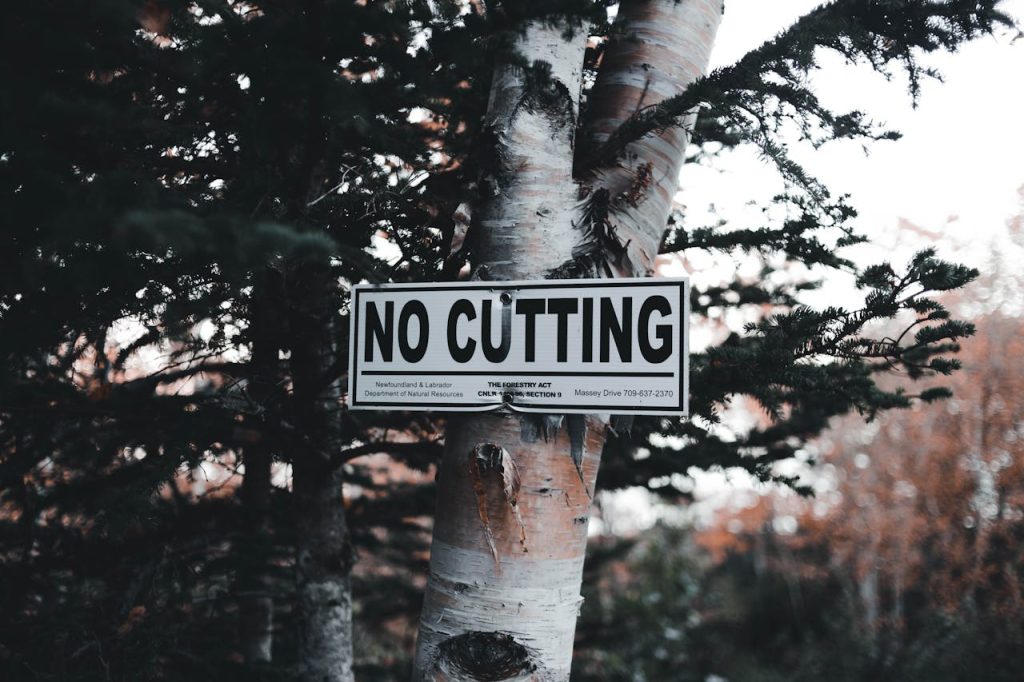
Sydney’s North Shore is renowned for its lush canopy, leafy streets, and significant trees that define the character of the region. However, this greenery is protected by a complex web of regulations designed to preserve the area’s environmental and aesthetic value. For homeowners, navigating the rules around tree removal can be confusing, with different councils enforcing their own specific Tree Preservation Orders (TPOs) and Local Environmental Plans (LEPs).
Understanding these regulations is critical before picking up a chainsaw or hiring a contractor. Unauthorised work can lead to substantial fines, legal action, and mandatory replanting orders. This guide provides a comprehensive overview of tree removal regulations across the North Shore, helping you determine what requires approval, what is exempt, and how to ensure your project remains compliant.
Why North Shore Councils Regulate Tree Removal
The strict regulations found across the North Shore exist to protect the region’s unique landscape. Councils like Ku-ring-gai, North Sydney, and Mosman place a high value on canopy cover, which provides shade, reduces urban heat, supports biodiversity, and maintains property values.
Several factors drive these stringent controls:
- Environmental Conservation: Many suburbs contain sensitive bushland, endangered ecological communities, and wildlife corridors that rely on mature trees.
- Heritage Preservation: The North Shore is home to numerous heritage conservation areas where trees are considered part of the historical fabric.
- Topography and Safety: The region’s steep terrain means trees often play a vital role in soil stability and erosion prevention. Conversely, the high density of mature trees in bushfire-prone zones necessitates careful management to balance safety with preservation.
Given these stakes, penalties for non-compliance are severe, designed to deter the removal of trees for purely cosmetic reasons or minor inconveniences.
What Counts as a “Tree” Under Local Council Rules
While definitions vary slightly between councils, a “tree” is generally defined by specific physical dimensions. If a plant meets these criteria, it is protected, and you cannot alter or remove it without permission.
Common standards across the North Shore include:
- Height: Most councils protect vegetation that exceeds a certain height, typically between 3 to 5 metres.
- Trunk Diameter: Trees are often defined by their trunk width, usually measured as Diameter at Breast Height (DBH)—approximately 1.4 metres above ground level. A circumference of 300mm to 400mm is a common threshold.
- Canopy Spread: Some regulations consider the width of the branches and foliage.
It is important to note that these measurements apply to both native and exotic species unless a specific exemption exists. Even if you planted the tree yourself, once it reaches the regulatory size, it falls under council protection.
Trees You Can Remove Without Council Approval
While most significant trees are protected, there are specific scenarios where council approval is not required. These exemptions are strictly defined, and homeowners must ensure their situation fits the criteria perfectly before proceeding.
Common exemptions across North Shore councils include:
- Dead or Dying Trees: If a tree is dead or in an irreversible state of decline, it may be removed without a permit. However, most councils require you to provide evidence, such as photos or an arborist’s confirmation, to prove the tree was dead prior to removal.
- Imminent Risk: Trees posing an immediate danger to human life or property—such as a split trunk about to fall—can often be removed urgently. This usually requires emergency documentation and retrospective notification to the council.
- Exempt Species: Many councils maintain a list of undesirable or invasive species (e.g., Privet, Bamboo, or Coral Trees) that can be removed regardless of size.
- 10/50 Vegetation Clearing Scheme: In designated bushfire-prone areas, homeowners may be allowed to clear trees within 10 metres of their home and vegetation within 50 metres without council approval. This is subject to specific mapping and legislation.
- Proximity to Structures: Some rules allow for the removal of trees located within a specific distance (e.g., 3 metres) of an approved dwelling’s foundation.
Important: Never assume an exemption applies. Always check your specific council’s current Tree Preservation Order or exempt species list. Misinterpreting these rules is a common cause of accidental illegal removal.
Trees That Always Require Council Approval
In most cases, if a tree is healthy, structurally sound, and contributes to the local canopy, you will need formal approval to remove or drastically prune it.
You must obtain a permit for:
- Large Native Species: Significant native trees like Angophoras, Turpentines, and Eucalypts are highly protected across the North Shore.
- Heritage-Listed Trees: Trees located on heritage properties or within heritage conservation areas are subject to rigorous assessment.
- Significant Tree Registers: Some councils maintain specific registers for trees of exceptional cultural, historical, or visual importance.
- Environmental Zones: Vegetation within designated “E-zones” (Environmental Conservation or Management zones) is heavily shielded from clearing.
Even pruning requires caution. Removing more than 10% of a tree’s canopy or cutting thick branches often triggers the need for a permit. Councils typically require an Arborist Report (from an AQF Level 5 qualified arborist) to justify the removal based on health, safety, or property damage considerations.
North Shore Council-by-Council Breakdown
Regulations differ significantly depending on which side of a boundary line you reside. Below is a summary of the key requirements for major North Shore councils.
North Sydney Council
North Sydney has comprehensive protection for canopy trees. A permit is generally required for any tree with a height of 5 metres or more, or a canopy spread exceeding 5 metres. Heritage conservation areas have stricter controls, often protecting smaller vegetation.
- Key Restriction: Removal for solar access or views is rarely approved.
- Exemptions: Specific declared noxious weeds and dead trees (with verification).
Willoughby City Council
Willoughby protects trees that are over 4 metres in height or have a trunk diameter exceeding 225mm at ground level (or 85mm at 1.4m high). Vegetation that forms a prominent part of the skyline is prioritised.
- Key Restriction: Pruning of tree roots is also regulated.
- Exemptions: Trees within 3 metres of an approved dwelling may be exempt, but rigorous definitions of “dwelling” apply.
Ku-ring-gai Council
Known for its “Green Web,” Ku-ring-gai has some of the strictest controls. Trees over 5 metres tall or with a trunk diameter of 150mm require approval. The council places a strong emphasis on retaining the urban forest and often requires replacement planting ratios of 1:1 or greater.
- Key Restriction: Trees listed as part of the Blue Gum High Forest or Turpentine-Ironbark Forest ecological communities are critically protected.
- Exemptions: Specific species listed on the council’s exempt list.
Lane Cove Council
Trees in Lane Cove are protected if they are over 4 metres tall or have a trunk diameter greater than 150mm. The council focuses heavily on maintaining bushland character adjacent to the national park.
- Key Restriction: Removal permits typically require a replacement tree to be planted on the property.
Mosman Council
Mosman’s regulations protect trees over 5 metres in height or with a trunk circumference of 450mm measured 300mm above ground. Given the harbour views, conflicts often arise, but the council maintains that views do not automatically justify removal.
- Key Restriction: Heritage conservation areas cover a large portion of the suburb, adding layers of protection.
Hornsby Shire Council
Covering the Upper North Shore, Hornsby protects all trees native to New South Wales, as well as any tree over 3 metres in height within heritage areas.
- Key Restriction: The Tree Preservation Order applies specifically to trees that contribute to the scenic quality of the Shire.
How to Apply for Tree Removal Approval
If your tree requires approval, following the correct procedure is essential to avoid delays. The process typically follows these steps:
- Check Council Regulations: Verify which council governs your property and review their specific Tree Preservation Order.
- Obtain an Arborist Assessment: Hire a qualified arborist (AQF Level 5) to inspect the tree. They will produce a detailed report outlining the tree’s health, structural integrity, and the justification for removal (e.g., disease, damage to foundations).
- Complete the Application: Submit the relevant permit application form to your local council. This will require payment of an application fee.
- Submit Supporting Documents: Include the arborist report, site plans, and photos.
- Council Inspection: A council tree officer will visit your property to inspect the tree and verify the claims in your application.
- Determination: Approval usually takes between 2 to 6 weeks. If approved, you will receive a permit outlining conditions, such as the requirement to plant a replacement tree.
For trees posing an immediate, obvious danger, some councils offer an expedited “emergency” process, but this still requires professional validation.
Penalties for Non-Compliance
Ignoring these regulations is a costly mistake. Councils in Sydney’s North Shore use aerial photography and community reporting to identify illegal tree works.
Penalties for unauthorised removal or damage include:
- On-the-spot Fines: Ranging from $3,000 for individuals to significantly higher amounts for corporations.
- Court Action: Serious breaches generally proceed to the Land and Environment Court, where fines can exceed $1 million depending on the severity and intent.
- Remediation Orders: You may be ordered to plant mature replacement trees and maintain them at your own cost.
- Criminal Conviction: In extreme cases, a criminal record may be recorded.
Crucially, as the property owner, you are liable even if a contractor performs the illegal work. Ensure any tree service you hire is fully aware of the regulations and has sighted a valid permit before starting.
Why a Professional Arborist Is Essential for Compliance
Navigating the intersection of environmental law, heritage restrictions, and safety requirements is complex. A professional arborist does more than just cut trees; they provide the expertise required to ensure legal compliance.
Qualified arborists understand the nuances of North Shore council regulations. They can accurately identify tree species, assess health and structural integrity using diagnostic tools, and draft the comprehensive reports required for council applications. Their involvement significantly increases the likelihood of a successful application by providing an objective, evidence-based justification for removal. Furthermore, reputable tree services carry appropriate insurance, protecting you from liability during the works.
Conclusion
Tree removal on Sydney’s North Shore is a regulated process designed to balance safety and development with the preservation of the region’s enviable environment. Whether you are dealing with a dangerous tree or planning a renovation, understanding the limitations and requirements of your local council is the first step.
Attempting to bypass these rules carries significant financial and legal risks. To ensure your project proceeds smoothly and legally, always seek professional guidance. Speak with GM McColl Tree Services for expert assessments, arborist reports, and compliant tree removal advice tailored to the specific requirements of North Shore councils.