

Many property owners wait until a tree is actively dropping dead branches before they suspect a problem. It is understandable. Trees are large structures that look perfectly fine until they suddenly do not. But once a tree reaches the point of shedding heavy limbs or turning entirely brown, the window to save it has usually closed.
Tree decay and decline rarely happen overnight. The earliest warning signs of tree disease are usually quiet and easy to miss if you do not know what to look for. A slightly thinner canopy, a patch of cracked bark, or a change in leaf colour can be the first clues that a tree is under serious stress.
Catching these symptoms early gives you options. Ignoring them trades a manageable problem today for a much larger, more expensive hazard tomorrow. Here is exactly how to spot the early signs of tree disease on your North Shore property, and what to do when you find them.
Why Early Detection of Tree Disease Matters
A healthy tree defends itself well against the elements. A sick tree quickly becomes a liability. Identifying tree disease early matters because it dictates how many options you have left to manage the problem.
When a fungal infection or soil health issue takes hold, it rarely stays confined to one small area. Pathogens spread through the vascular system, blocking water and nutrient flow. Over time, this weakens the structural integrity of the branches, trunk, and root system. What starts as a minor aesthetic issue can quickly escalate into a severe safety risk, particularly during Sydney storm seasons.
The longer you wait, the less predictable the tree becomes. A diseased tree with compromised roots is far more likely to fall onto your roof, your car, or your neighbour’s fence. Early detection allows an arborist to apply treatments or corrective pruning to halt the decline. Once the disease is advanced, removal becomes the only safe choice. Spotting the signs of tree disease early is your best defence against property damage and rising repair bills.
Common Causes of Tree Disease in Sydney
Sydney’s North Shore provides a beautiful climate for trees, but it also creates ideal conditions for certain plant diseases and pests to thrive. Tree health in Sydney is generally threatened by three main factors.
First, environmental stress plays a massive role. Extended periods of heat, drought, or poor soil drainage weaken a tree’s natural defences. When a tree is stressed by its environment, it becomes a prime target for secondary problems.
Second, fungal infections are common in our humid, coastal climate. Pathogens that cause root rot or canopy dieback thrive in moist soil and warm weather. These fungi attack the root collar or foliage, slowly starving the tree of nutrients.
Finally, pest activity accelerates tree decline. Boring insects and sap-sucking pests look for weakened trees. They tunnel into the bark or strip the leaves, opening wounds that allow bacteria and fungi to enter.
Early Signs of Tree Disease to Watch For
You do not need to be a botanist to inspect your property. Look for these visible changes across the canopy, trunk, and base.
Leaf Discolouration or Spots
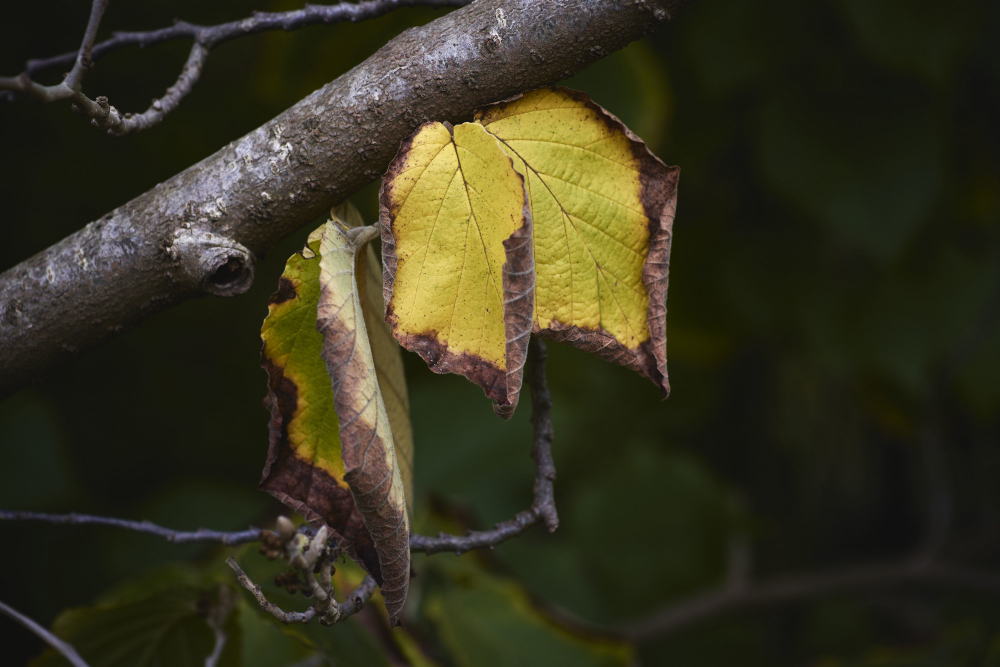
Leaves act as a tree’s early warning system. Yellowing leaves during spring or summer, brown edges, or unusual black spots may indicate underlying issues. Fungal leaf diseases often present as dark patches or target-like rings on the foliage.
Premature Leaf Drop
Deciduous trees lose their leaves in autumn. If your tree sheds its canopy in the middle of January, you have a problem. Leaves falling outside normal seasonal patterns can be an early sign of severe root stress or vascular disease.
Dieback in Branches
Progressive dieback is a major red flag. This happens when the tips of the branches die first, and the dead wood slowly works its way back toward the trunk. Dead tips or a canopy thinning on one specific side of the tree often point to a blocked vascular system.
Cracks or Damage in Bark
The bark protects the tree’s internal systems. Deep splits, peeling sections, or areas where the bark looks sunken and dead expose the wood to infection. Bark damage that oozes dark sap is a serious sign of internal decay.
Fungal Growth
Mushrooms growing at the base of the trunk or bracket fungi attached to the wood are not harmless garden features. This type of fungal growth indicates that the wood inside the tree is actively rotting away. By the time fungi appear on the outside, internal tree decay is usually well underway.
Pest Activity
Insects leave distinct trails. Look for small, perfectly round holes in the trunk, sawdust accumulating at the base, or a visible pest infestation on the leaves. These signs show that insects are feeding on the tree’s vital tissues.
Leaning or Structural Changes
Trees naturally grow at slight angles. However, a sudden, noticeable shift in the tree’s position indicates that the root system is failing. Ground heaving around the base often accompanies this dangerous structural change.
Poor Growth or Sparse Foliage
Compare the tree to previous years. If the spring growth is noticeably stunted, or the canopy looks sparse and thin compared to its usual density, the tree is struggling to draw adequate nutrients from the soil.
Tree Pests That Can Affect Local Properties
Many tree pests in Australia do not just cause cosmetic damage; they actively spread disease and kill trees. A pest infestation usually falls into one of two categories: sap-suckers or borers.
Sap-sucking insects, like the Sycamore Lace Bug or various aphids, feed on the fluids inside the leaves. This causes the foliage to yellow, curl, and drop prematurely. While a healthy tree can survive a mild attack, repeated infestations severely deplete the tree’s energy reserves.
Borers are far more destructive. The larvae of these insects chew their way through the inner bark and sapwood. This tunnelling destroys the vascular tissue the tree relies on to move water from the roots to the canopy. Borers often target trees that are already suffering from environmental stress. As they tunnel, they also create entry points for fungal pathogens, speeding up the tree’s overall decline.
What to Do If You Notice Signs of Tree Disease
Spotting a symptom is only the first step. What you do next determines whether the tree survives.
Start by monitoring the changes. Take a few photos on your phone to track how quickly the problem is spreading. Does the leaf discolouration affect the whole tree, or just one branch?
Do not attempt DIY treatments. Applying hardware-store chemicals or heavily pruning a sick tree without understanding the root cause usually makes the problem worse. Pruning at the wrong time can spread fungal spores, and the wrong fertiliser can burn stressed roots.
Instead, seek professional advice. If your trees are showing signs of stress, an experienced arborist can assess their condition and recommend appropriate care. An expert will identify the specific pathogen or pest and provide a clear plan of action.
When to Call an Arborist
Some issues require immediate intervention. You should call an arborist if you notice multiple symptoms appearing at once, such as canopy thinning combined with fungal growth at the base.
Structural concerns are an absolute priority. If a large, established tree develops a sudden lean, deep trunk cracks, or ground heaving at the roots, it poses a direct threat to your home and safety. Do not wait for it to fall in a storm.
Getting professional arborist services means you receive a formal risk assessment. They will tell you exactly what is wrong and whether the tree can be saved, or if safe tree removal services are necessary to protect your property.
Preventing Tree Disease Long-Term
The most cost-effective way to manage tree disease is to stop it before it starts. Preventative care builds a strong, resilient tree.
Book regular tree inspections. Having a professional check your trees annually catches minor issues before they become terminal. Proper watering and soil care are also vital. Ensure your trees get adequate water during dry spells, and avoid compacting the soil over their root zones with heavy vehicles or construction.
Keep up with seasonal maintenance. Professional tree pruning services remove deadwood and improve airflow through the canopy, drastically reducing the risk of fungal infections. If you need help keeping your property safe, reliable tree services in North Shore provide the ongoing care your landscape needs.
Frequently Asked Questions
What are the first signs of tree disease?
The earliest signs usually appear in the leaves or the bark. Look for unusual leaf discolouration, premature leaf drop, small cracks in the bark, or patches of canopy thinning.
Can a diseased tree recover?
Yes, many diseased trees recover if the issue is caught early. Arborists can apply targeted treatments, improve soil health, or safely prune away infected branches. However, trees with severe internal decay or extensive root rot usually require removal.
What causes tree disease in Australia?
Tree disease is primarily caused by environmental stress, fungal pathogens, and insect pests. Prolonged drought, poor drainage, and physical damage to the trunk or roots make trees highly vulnerable to infection.
How do I know if my tree is dying?
A dying tree often displays progressive branch dieback, large sections of peeling bark, deep structural cracks, and fungal growth near the base. If a tree fails to produce leaves in spring, it is likely already dead.
Are tree pests harmful to trees?
Yes. While some pests only cause minor leaf damage, others, like borers, tunnel directly into the trunk and destroy the tree’s internal vascular system. This severely damages tree health and invites secondary fungal infections.
When should I call an arborist?
Call an expert as soon as you notice sudden changes in a tree’s health or structure, such as a new lean, cracked bark, or falling branches. To get a professional assessment, contact our team today.
Photo Source:Image by wirestock on Magnific