

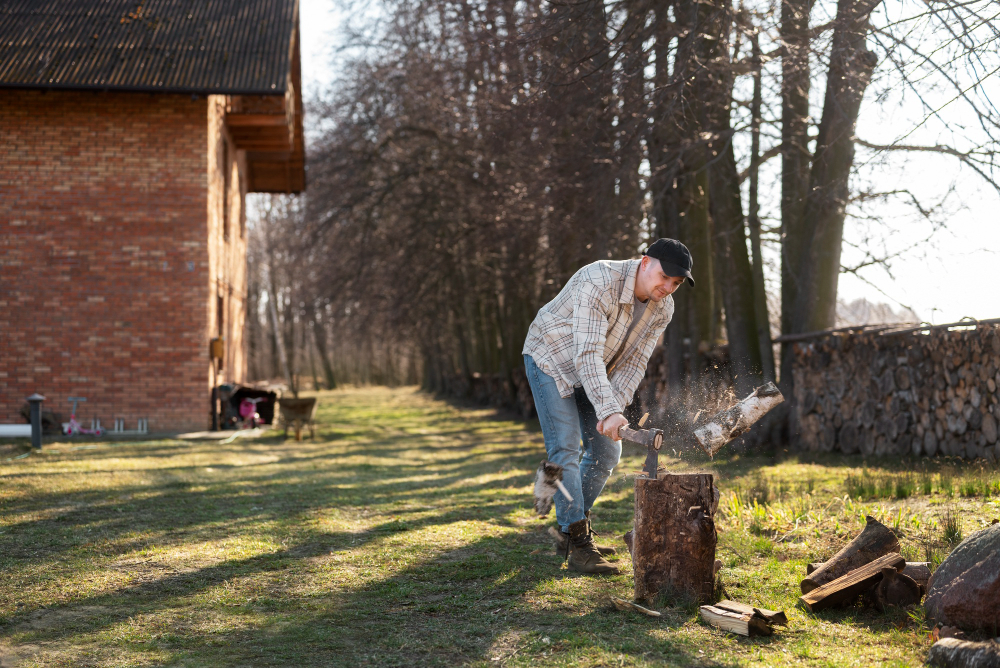
You look at a tree in your yard. It drops leaves constantly, blocks the afternoon sun, or leans uncomfortably close to the fence. For many property owners, the immediate thought is to grab a chainsaw, clear the weekend schedule, and tackle the problem directly. It feels like a straightforward landscaping task.
But a tree is a massive, unpredictable structure of stored energy. Taking one down requires technical precision, specific safety gear, and a deep understanding of local compliance laws. When untrained individuals attempt this work, the consequences usually arrive fast and hit hard. Repair bills, hospital visits, and council fines easily wipe out any perceived savings from skipping a professional service.
Understanding the DIY tree removal dangers before you start cutting is the smartest decision you can make for your property. This guide breaks down exactly what happens when tree removal goes wrong, why local councils monitor illegal clearing so closely, and how to safely manage problematic trees on your land.
Why Some Homeowners Consider DIY Tree Removal
It is easy to see why doing it yourself looks appealing. Professional quotes for tree removal in Sydney can seem like a significant upfront investment. Homeowners often weigh that cost against a quick trip to the hardware store for a chainsaw and a ladder.
This happens frequently with trees under five metres tall. A small to medium tree looks entirely manageable from the ground. People assume the wood will fall exactly where they want it to, and the cleanup will just take a few trips to the green waste bin.
The core issue is a lack of awareness around the physical physics of a falling tree. Homeowners focus on the act of cutting the trunk. They rarely factor in wind direction, hidden rot, root stability, or the complex regulations governing tree preservation on the North Shore.
The Real Safety Risks of DIY Tree Removal
Is tree removal dangerous? Yes. It is consistently ranked among the most hazardous tasks a person can attempt. The risks multiply rapidly when you remove professional training and safety equipment from the equation.
Risk of Serious Injury
Chainsaws are incredibly effective tools, but they are unforgiving. Without proper kickback training, a chainsaw can lurch violently backward toward the operator if the tip strikes hard wood or if the cut pinches the blade. Professional arborists wear chainsaw-rated leg chaps, helmets with face shields, and cut-resistant gloves. Standard household workwear provides zero meaningful protection against a moving chain.
Falling branches present another immediate threat. A dead limb can snap without warning mid-cut, bouncing back toward the person holding the saw.
Unpredictable Tree Movement
Trees do not always fall the way they lean. Internal decay can completely alter a tree’s weight distribution. A trunk that looks solid on the outside might be entirely hollow on the inside. As soon as you begin cutting, that hidden structural instability can cause the tree to twist or collapse backward. This creates a “barber chair” effect, where the trunk splits vertically and the base kicks back violently toward the cutter.
Property Damage
A ten-metre tree can weigh several tonnes. Misjudging the drop zone by just a few degrees means that weight lands on your roof, your vehicle, or your neighbour’s newly built fence. When you drop a heavy section of timber, it does not just hit the ground and stop. It bounces, rolls, and shatters whatever sits in its path.
Working at Heights
Ladders and chainsaws are a dangerous combination. Soil shifts under ladder legs, and branches snap under body weight. Climbing a tree without a certified harness and anchor system means a single slip turns into a freefall. Even a fall from three metres can cause permanent spinal injuries.
Why Tree Removal Requires Professional Equipment and Training
Taking down a tree safely in an urban environment rarely involves chopping it at the base and shouting “timber.” It requires a methodical process called sectional dismantling.
Professionals use specialised rigging systems, ropes, and pulleys to lower heavy branches to the ground in a controlled manner. This protects the property below and ensures the crew remains safe. Level 5 Arborists train extensively to calculate load capacities, identify structural weaknesses before climbing, and use elevated work platforms or cranes when a tree is too unstable to climb. Position expertise is critical for keeping everyone on site out of harm’s way.
Legal Considerations in NSW
Beyond the physical hazards, DIY work carries severe legal risks. The tree removal laws NSW enforces are strict, and ignorance of local planning laws is not accepted as an excuse.
In areas like the North Shore, your local council dictates which trees can be touched. Council approval is required before removing most trees, even those on your private property. Depending on the species, height, and trunk diameter, you generally need a formal permit or a Development Application to proceed.
Penalties for illegal clearing are severe. Councils can issue on-the-spot fines ranging from $3,000 to $15,000 per tree. In serious cases taken to the Land and Environment Court, fines can exceed $1.1 million. Furthermore, SafeWork NSW mandates that any work within three metres of live powerlines requires specific licensing. Never attempt to prune or remove vegetation near powerlines.
Insurance and Liability Risks
Most standard home and contents insurance policies exclude coverage for unlicensed or illegal high-risk work.
If you remove a tree yourself without council approval and it crushes your roof, your insurer will likely deny the claim. If that same tree damages your neighbour’s property, you become personally liable for the repair costs. Professional arborists carry extensive public liability and professional indemnity insurance. If an accident happens during a professional job, you are completely shielded from the financial fallout.
When Tree Removal Should Always Be Left to Professionals
Some scenarios leave absolutely zero room for DIY attempts. You must call a professional if you are dealing with:
- Large, mature trees exceeding five metres in height.
- Trees positioned close to houses, boundary fences, or underground plumbing.
- Trees showing visible signs of disease, deadwood, or fungal growth at the base.
- Trees leaning heavily after a severe storm.
These situations require emergency tree services and a professional structural assessment to prevent catastrophic failure.
The Benefits of Using a Qualified Arborist
Hiring a qualified arborist in Sydney offers total peace of mind. You get a safety-focused approach that eliminates the risk of injury and property damage.
Professionals handle the complicated council compliance process for you, ensuring you never face illegal clearing fines. They bring the right machinery to complete the job efficiently, turning a dangerous multi-day struggle into a controlled, safe operation. When the work is done, they process the green waste, remove the stump, and leave your property clean and secure.
Frequently Asked Questions
Is it safe to remove a tree yourself?
No. Tree removal involves heights, heavy machinery, and unpredictable falling weights. It requires specialised safety gear, rigging equipment, and training to execute safely.
Do I need permission to remove a tree in NSW?
Yes, in most cases. You generally need approval from your local council to remove or prune trees, depending on their height, species, and location. Exemptions exist, but you should always check your local Tree Preservation Order first.
What are the risks of DIY tree removal?
The primary tree removal risks include serious injury from chainsaw kickbacks, falls from ladders, property damage from misdirected falling timber, and massive council fines for illegal clearing.
Can small trees be removed without an arborist?
While small trees are physically easier to cut, they may still be protected by council regulations. If the tree is completely exempt from local laws and poses no risk to property or powerlines, a competent homeowner might manage it. However, professional assessment is always recommended.
What happens if tree removal causes damage?
If you cause the damage during a DIY removal, you are personally liable for all repair costs. Your home insurance will likely refuse to cover damages caused by unlicensed or illegal tree work.
When should I call a professional?
Call a professional whenever a tree is near a structure, shows signs of disease, requires climbing, or sits near powerlines. If your trees are showing signs of stress, an experienced arborist can assess their condition and recommend appropriate tree pruning services.
Ensure Your Property Stays Safe and Compliant
Delaying necessary tree work allows a small problem to grow into a dangerous hazard. But attempting to solve that problem yourself usually creates an entirely new set of physical and financial disasters. A planned, professional removal protects your home, your health, and your wallet.
If you have a tree that needs assessment, contact our team today. Our certified arborists will evaluate the structure, navigate the council requirements, and execute the removal with industry-leading safety standards.
Photo Source: Image by freepik