

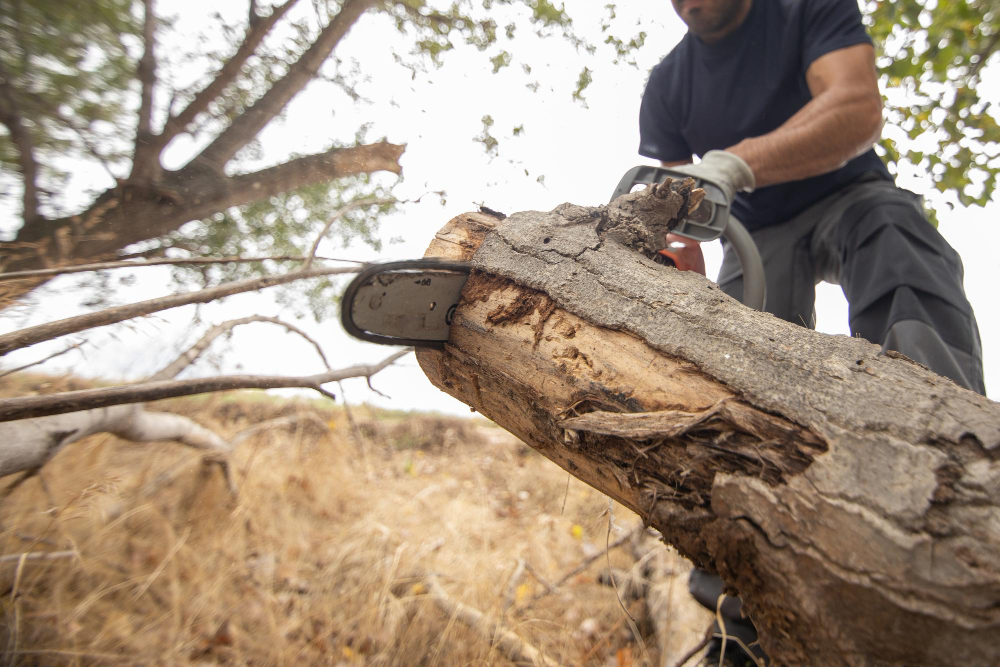
If you’ve ever searched online for “tree lopping North Shore” or asked a neighbour to recommend someone who can “just lop it back,” you’re not alone. Many property owners use the term “lopping” when they want a tree cut back quickly—whether for views, light, or clearance. But here’s the catch: what most people call “lopping” can actually harm your tree, create serious safety hazards, and sometimes breach council regulations.
This guide explains what tree lopping really means, why arborists and standards bodies discourage it, and what you should do instead to keep your property safe and compliant.
What Is Tree Lopping (and What People Usually Mean)?
In everyday language, “tree lopping” often means cutting a tree back hard—removing large limbs or topping the crown to quickly reduce its size. Homeowners might ask for lopping when a tree blocks their view, shades the house, or feels too big for the yard.
From a professional arborist’s perspective, however, “lopping” typically refers to indiscriminate cutting that ignores the tree’s natural structure. Instead of making precise cuts just outside the branch collar (where the tree can heal properly), lopping involves bluntly removing whole sections of branches or the entire top of the tree. This practice is also called “topping” or “hat-racking.”
Why does the distinction matter? Because using the wrong terminology can lead to misunderstandings when getting quotes, and more importantly, lopping can trigger a cascade of problems for tree health, safety, and council compliance. Not all pruning is lopping—but when lopping does occur, it’s usually poor-quality work that creates long-term issues.
Why Tree Lopping Can Be Risky (Safety + Tree Health)
It can create weak regrowth that breaks later
When large branches are lopped, the tree responds by activating dormant buds near the cut sites. These buds produce fast-growing shoots called epicormic growth or water sprouts. While this regrowth might make the tree look leafy again within months, there’s a hidden problem: these new shoots are only weakly attached to the parent branch.
Unlike normal branches that develop in a socket of overlapping wood tissues, epicormic shoots anchor only in the outermost layers of bark. They can grow up to six metres in a single year in some species, but they’re prone to snapping—especially during storms, high winds, or when weighted down by foliage. The risk often increases over time rather than appearing immediately, which means a lopped tree can become more dangerous as the years pass.
It can increase decay and long-term defects
Lopping leaves large, ragged wounds that expose the tree’s internal wood to fungi, bacteria, and decay organisms. A tree can usually defend itself when side branches are removed with proper pruning cuts, but it struggles to seal the pervasive wounds left by topping. According to arboriculture research, these large wounds create pathways for decay to travel down through branches and into the trunk.
The decay isn’t always visible from the outside—your tree might still have green leaves on top while becoming hollow or brittle inside. Over time, this internal rot weakens the tree’s structural integrity, making it far more likely to fail without warning.
It can make trees more unstable in storms
Sudden removal of a large portion of the canopy changes the tree’s weight distribution and wind loading. While it might seem logical that a smaller tree would be safer, the opposite can be true after lopping. The rapid regrowth is top-heavy and poorly attached, creating new points of weakness that can snap during severe weather.
Additionally, the loss of foliage disrupts the tree’s natural sway mechanics. A properly structured tree bends and flexes in the wind; a lopped tree with unbalanced regrowth can experience unpredictable stresses that lead to limb failure or even whole-tree collapse.
It can lead to repeat costs
Lopping isn’t a one-time fix. Because the tree responds by producing vigorous regrowth, you’ll need to have it cut back again within a few years. This creates a costly cycle: lop → regrow → lop again. Each time, the cuts become more difficult and expensive, and the structural problems compound.
In contrast, proper pruning by a qualified arborist promotes healthy, manageable growth that requires less frequent maintenance. You’ll save money in the long run by investing in correct tree care from the start.
It can stress or kill the tree
A tree’s leaves are its food factories—they manufacture the sugars needed for healthy growth through photosynthesis. When lopping removes 50% to 100% of the leaf-bearing crown, the tree is temporarily starved of energy. If the tree doesn’t have sufficient stored reserves to produce new foliage quickly, it becomes severely stressed and vulnerable to secondary diseases such as root decay.
The outcome depends on the species, the extent of the cuts, and the tree’s overall health. Some trees will survive lopping but never fully recover their natural form or structural strength. Others will decline over several years and eventually die.
Why Tree Lopping Is Often Not Allowed on the North Shore (Council Rules Explained Simply)
Many North Shore councils regulate tree pruning and removal to protect the urban canopy and maintain the area’s leafy character. Severe lopping or major reduction work may breach council pruning limits, especially if it involves removing more than a certain percentage of the canopy in a 12-month period or cutting back a tree beyond permitted thresholds.
For example, some councils allow minor maintenance pruning (such as removing up to 10% of the canopy) without a permit, but anything more significant requires approval. Lopping often involves removing far more than 10% of the tree’s foliage, which means it could trigger the need for a council permit—or even be classified as unauthorised tree removal.
The rules vary depending on your local government area (Northern Beaches, Ku-ring-gai, Willoughby, North Sydney, Lane Cove, Hornsby, Mosman, or Ryde), the size and species of the tree, and the type of work you want to do. Some trees are protected due to their size, location, or heritage value, and heavy pruning or lopping may be prohibited outright.
Here’s a practical warning: if you hire someone who offers to “just lop it” without first checking your council’s requirements, you could end up with an illegal tree work notice, a fine, and a requirement to replant or provide compensatory trees. It’s always worth confirming the rules before any major pruning takes place.
Tree Pruning vs Tree Lopping: What’s the Difference?
| Aspect | Proper Pruning | Tree Lopping |
| Goal | Maintain tree health, structure, and safety | Quick size reduction |
| Method | Selective cuts at branch collars; follows tree biology | Indiscriminate cutting of branches to stubs |
| Long-term structure | Preserves natural form and strength | Destroys natural form; creates weak regrowth |
| Council compliance risk | Generally compliant when done correctly | Often breaches council limits or requires approval |
| Ongoing maintenance | Less frequent; promotes healthy growth | Requires repeated cutting due to vigorous regrowth |
| Safety outcomes | Reduces risk through targeted defect removal | Increases risk through weak attachments and decay |
What to Do Instead (Safer Alternatives That Still Achieve Your Goal)
If you’re concerned about a tree’s size, safety, or impact on your property, there are better options than lopping:
Deadwood removal for safety
Removing dead, dying, or broken branches reduces the risk of falling limbs without compromising the tree’s living structure. This is often exempt from council permits and is a routine part of tree maintenance.
Selective pruning for clearance
If branches are interfering with your roof, gutters, or driveway, an arborist can prune them back to a suitable lateral branch. This maintains the tree’s natural form while addressing your clearance needs.
Canopy thinning
Thinning involves selectively removing some branches to reduce density and wind resistance while keeping the tree’s overall shape intact. It’s a less invasive way to improve light penetration and reduce storm risk.
Targeted limb removal to reduce risk over targets
If specific branches pose a hazard—such as overhanging a house, pool, or driveway—those limbs can be removed individually without lopping the entire tree. This approach focuses on managing actual risk rather than simply reducing size.
Tree removal when appropriate
Sometimes the safest and most responsible option is to remove a tree and replace it with a more suitable species for the location. A qualified arborist can assess whether removal is warranted and help you navigate the council approval process.
An arborist can assess your tree and recommend the least invasive option that meets your needs while protecting the tree’s health and your property’s safety.
How to Spot a Dodgy Quote (Consumer Checklist)
Not all tree service providers operate to the same standard. Here are some red flags to watch for when comparing quotes:
- Vague scope of work: Phrases like “lop it back” or “cut it down a bit” without specifying which branches or how much will be removed
- No discussion of council rules: A reputable contractor will check whether the work requires a permit or approval before starting
- No insurance details: All tree work should be covered by public liability insurance; ask for proof
- Pressure tactics or cash-only deals: Be wary of contractors who push for immediate payment or won’t provide a written quote
- Unsafe methods: Look for proper equipment, drop zone control, and traffic management where necessary
- Unwilling to provide a written quote: A professional will document the work, the cost, and the timeline in writing
According to NSW Fair Trading guidance, you should always get at least two written quotes that clearly describe the work, list all materials, and reflect your specifications. If a contractor won’t provide this, it’s a sign to look elsewhere.
Frequently Asked Questions
Is tree lopping illegal in NSW?
Lopping itself isn’t explicitly illegal, but it often breaches council regulations if it exceeds permitted pruning limits or if the work is done without a required permit. Additionally, the practice is discouraged under Australian Standards for tree pruning (AS 4373) because of the harm it causes to tree health and safety.
What’s the difference between lopping and pruning?
Pruning is selective removal of branches to improve tree health, structure, and safety, using cuts that allow the tree to heal properly. Lopping is indiscriminate cutting that ignores tree biology and typically leaves large, ragged wounds that lead to decay and weak regrowth.
Does lopping make a tree grow back faster?
Yes, but not in a good way. Lopping triggers rapid regrowth of weakly attached epicormic shoots that grow up to six metres per year in some species. These shoots are prone to breaking and require ongoing maintenance, creating a costly cycle.
Can lopping make a tree dangerous?
Absolutely. Lopping creates large wounds that invite decay, produces weak regrowth that can snap in storms, and compromises the tree’s structural integrity. A lopped tree often becomes more hazardous over time rather than safer.
Will council fine me for illegal tree work?
If you remove or heavily prune a tree without the required approval, your council can issue a penalty notice, require compensatory planting, or take legal action. The exact penalties vary by council, but unauthorised tree work is taken seriously across the North Shore.
What is “topping” a tree?
Topping is another term for lopping—it refers to cutting off the top of a tree or removing large sections of the crown. It’s widely recognised as one of the most harmful practices in tree care and is explicitly discouraged by arboriculture standards.
Can an arborist reduce a tree without harming it?
Yes, a qualified arborist can use techniques like crown reduction (pruning back to suitable lateral branches), selective limb removal, and canopy thinning to reduce size and risk while maintaining the tree’s health and structure. These methods follow proper pruning standards and don’t create the problems associated with lopping.
Do I need approval to heavily prune a tree on the North Shore?
It depends on your council, the size and species of the tree, and the extent of the pruning. Many councils require a permit for significant pruning (typically defined as removing more than 10% of the canopy in a 12-month period), especially for trees over a certain height or trunk diameter. Check your council’s tree management guidelines or contact them directly before proceeding.
Choose Professional Arborist Pruning Over Risky Lopping
Tree lopping might seem like a quick fix, but it usually creates more problems than it solves—from weakened structure and increased decay to costly repeat work and potential council fines. The good news is that there are safer, more sustainable alternatives that can still address your concerns about size, clearance, or safety.
By choosing proper arborist pruning that considers tree health and council compliance, you protect both your property and your investment. And if a tree genuinely poses a risk or is unsuitable for its location, professional tree removal followed by replanting with a more appropriate species is a far better long-term solution than repeated lopping.
If you’re unsure whether your tree needs pruning, reduction, or removal, contact G McColl Tree Services for a comprehensive arborist assessment. We’ll evaluate the tree’s condition, discuss your options, and recommend the safest approach that meets both your needs and council requirements.
Source: Image by wirestock on Freepik